Bird — Ride Electric
- 4.8
- Rating
- 10.00M
- Installs
- Free
- Price

 Analysis by App-foxy
I first think of Bird as a practical answer to a very specific city problem: getting across a short distance without waiting for a bus, calling a car, or bringing a full-size vehicle into the trip. It is a free Travel & Local app from Blue Jay Transit Inc. built around shared electric vehicles, and its appeal becomes clear when a journey is too far to walk comfortably but too short to justify a taxi or rideshare.
That convenience is not universal, though. Bird works best when shared vehicles are available where you need them, local riding rules suit your route, and you are comfortable handling the final part of the trip yourself. I found it more useful as a flexible last-mile tool than as a complete replacement for public transport. That distinction matters: it can make a short urban journey easier, but it does not remove the need to think about availability, parking, safety, or the total cost of each ride.
How Bird fits into an everyday city journey
The app’s store summary describes shared electric vehicles, while its short description is simply Bird. In practical terms, I see it as the digital starting point for finding and using Bird’s local shared mobility service. The app belongs to the Travel & Local category, and the basic download is free. That means you can install it and explore the service without paying for the app itself, but free access should not be confused with free riding. The cost of an individual trip is a separate consideration and can depend on the ride circumstances and local availability.
You May Also Like

 Pandora - Music & Podcasts
Pandora’s Music Is Easy to Start, but Harder to Recover
Pandora’s strength is its low-effort path from a seed to a station. Its weak spot is how much confidence it asks you to place in connection, setup, and quiet recovery.

 8 Ball Pool
 Is Built on Rivalries, Rematches, and Routine
A close look at the rivalries, rematches, shared routines, and unanswered safety questions that turn a quick pool match into a persistent mobile community.

 Samsung Music
’s Quiet Strength Is Playing What You Already Own
Its reach comes less from spectacle than from dependable access to a personal library. That simplicity is both the app’s strongest retention engine and its ceiling.

 AccuWeather: Weather Radar
AccuWeather Review: A Quick, Clear Forecast for Everyday Decisions
For everyday plans, the best forecast is the one you can understand quickly. AccuWeather makes rain timing, radar, and local conditions easy to act on, with a few trade-offs.

 Hill Climb Racing
Why Hill Climb Racing Still Turns Crashes Into One More Run
A tiny car, a bumpy hill and one more upgrade: Hill Climb Racing keeps resurfacing because its simple chaos makes every near-miss feel personal.

 AliExpress - Shopping App
AliExpress Makes Global Shopping Feel Personal, but Shoppers Bear the Risk
AliExpress turns a global marketplace into a pocket-sized discovery engine. Its reach is useful, its shopping loop compelling, and its trade-offs easy to miss.
More From Our News Desk
View All News


That is the first value question I would ask before installing it: am I looking for a free app, or am I looking for free transportation? Bird answers the first part, not the second. For someone who regularly needs short urban trips, the value comes from saving time and reducing friction rather than from avoiding every transport expense. For someone expecting a no-cost alternative to walking or transit, the experience may be disappointing.
The service has been available since October 9, 2017, and the current app version is 4.399.0.8. It supports devices running iOS 9 or later, which gives it a broad compatibility range for people using older Apple hardware. The age rating is Everyone, so the app is positioned for a general audience. I would still treat the riding activity itself as something requiring adult judgement, attention to local rules, and a realistic assessment of traffic and road conditions.
Bird has built substantial user recognition over time. Its listing shows an average rating of 4.8 from around 285 thousand ratings, with more than 16 thousand written reviews, and it has passed 10 million installs. Those figures suggest that the app has reached a large audience and that many users find the basic idea useful. They do not guarantee that a vehicle will be available on my street or that every trip will feel equally smooth, so I would use the popularity as reassurance about adoption, not as a promise about my local experience.
What the free download actually gives you
The free download is valuable before a ride because it lets you decide whether Bird is relevant to your routine. I can check whether the service makes sense for the places I visit, compare the idea with walking or public transportation, and avoid committing to a paid membership simply to investigate the app. That low entry barrier is one of Bird’s strongest advantages.
It also makes Bird easy to keep as a backup. I might normally take a bus, but on a day when a short connection would add too much waiting, a shared electric vehicle can become an alternative. The app is most convincing in that role: not necessarily the only transport tool on my phone, but a spare option for the awkward gap between a transit stop and a destination.
There is a useful habit I recommend before relying on it for an appointment. Open the app while you still have time to choose another route. Check the nearby vehicle situation and consider where the trip ends, rather than assuming the vehicle will be waiting exactly where you want it. This simple check prevents the common mistake of treating shared mobility like a privately owned scooter that is always ready outside.
A realistic use case: the last stretch after transit
Imagine I take a train to a station and still have a long walk to a meeting, a class, or a shopping area. Walking may be possible, but the weather is poor and I am carrying a bag. A Bird vehicle could make that final stretch less tiring. I would use the app to look for a nearby vehicle, ride only as far as needed, and then pay attention to ending the trip in a place where parking is permitted and considerate.
This is where Bird can deliver value that a normal transit app cannot. A transit app may show scheduled routes, but it does not solve the physical gap between the stop and the destination. A taxi or rideshare can cover the same distance with less physical effort, yet it may feel excessive for a short hop. Bird sits between those choices: more flexible than fixed-route transit and generally more self-directed than a car service.
The trade-off is that I take on more responsibility. I need to ride attentively, understand the local environment, and finish properly. If I am wearing unsuitable clothing, carrying something awkward, travelling with a child, or arriving late at night in an uncomfortable area, a car-based option may be the more sensible choice even if Bird appears faster or cheaper in the moment.
Where the app feels more useful than ordinary alternatives
Compared with walking, Bird can turn an inconvenient short journey into a manageable one, especially when hills, heat, or a tight schedule change the calculation. Compared with a bus, it offers more direct movement and avoids waiting for a route that does not align with my destination. Compared with a taxi or rideshare, it gives me control over the trip and does not require a driver to handle a very short distance.
That flexibility is also its limitation. Public transit is usually better for predictable longer journeys, especially when I want to sit back and avoid navigating traffic. Walking remains better for very short distances because it costs nothing and requires no vehicle search or end-of-trip decision. A car service is better when I have luggage, need door-to-door convenience, or do not want to ride myself. Bird is strongest in the narrow middle ground between those options.
One non-obvious advantage is the way it can support a mixed journey. I do not have to think of the app as competing with transit for the entire route. It can handle only the inconvenient segment while a train or bus handles the longer one. That approach makes the service easier to justify because I am using it where its flexibility matters most instead of paying for it across a journey that transit already serves well.
The practical friction I would plan around
Shared vehicles introduce uncertainty that personal transport does not. The nearest vehicle may not be close enough, the available choice may not suit the direction I want to travel, and the vehicle could disappear before I reach it. I would never make Bird my only plan for an important appointment unless I had enough time to switch to walking, transit, or another option.
Ending the ride deserves equal attention. A vehicle is shared, so leaving it carelessly can create a problem for the next person and may conflict with local rules. I would think about the destination before starting, not only the route. If the final address has no sensible place to leave the vehicle, the apparent convenience can vanish during the last minute of the trip.
Weather and comfort also change the value calculation. An electric vehicle may be attractive on a clear day, but rain, strong wind, extreme heat, or poor visibility can make walking under cover or taking a car more appealing. The app itself cannot make an unsuitable riding day suitable. I would treat weather as part of the transport decision, not as a minor detail after opening the map.
There is also a learning curve for first-time users. The idea is simple, but a smooth ride depends on understanding the complete flow: finding a vehicle, checking the route, riding responsibly, and finishing the session correctly. My advice is to try it first on a relaxed, familiar trip rather than during a rushed transfer. That gives me time to learn the process without turning a small transport experiment into a stressful commute.
Who is likely to get the most value
Bird makes the most sense for urban users who regularly face short gaps in their journeys. Students moving between nearby locations, commuters connecting to a workplace, visitors exploring a city, and residents dealing with occasional last-mile problems are the clearest audience. The free app makes it easy to test whether the service fits a particular neighborhood before making it part of a routine.
I would especially recommend it to someone who values independence but does not want to own or maintain a personal electric vehicle. Shared access removes the need to store a vehicle at home, charge it, or carry it through every part of the day. That convenience is meaningful for people whose transport needs are occasional rather than constant.
It is less suitable for people who need guaranteed availability, step-free travel, substantial cargo capacity, or a completely passive journey. Someone travelling with heavy luggage may prefer a car. Someone with mobility requirements should choose transport based on confirmed accessibility rather than assume a shared electric vehicle will meet those needs. A person who dislikes riding near traffic or cannot safely manage the vehicle should skip it, even if the app is popular.
I would also be cautious about recommending it as a money-saving solution without considering the entire pattern of use. Because the app is free but rides are not automatically free, frequent short trips can add up. Walking and ordinary public transit may offer better value for a person whose main goal is the lowest possible transport cost. Bird’s value is convenience and flexibility; it is not automatically the cheapest choice in every city or for every route.
Small habits that make the experience better
My first tip is to search before leaving the place where I am comfortable. That gives me a chance to compare the vehicle location with a walking route and to change plans if the nearest option is inconvenient. It is a simple workflow, but it avoids standing outside while trying to solve the whole journey on the spot.
My second tip is to plan the ending before the beginning. I would identify a reasonable destination area, consider whether leaving the vehicle there will obstruct anyone, and avoid starting a ride that has no clear finish. This is more important than shaving a few minutes from the route because a badly chosen endpoint can turn a convenient ride into a frustrating one.
My third tip is to use Bird selectively rather than automatically. If the walk is short and pleasant, I would walk. If the route is long and predictable, I would compare transit. If I am carrying too much or the conditions are poor, I would choose a car. Bird becomes more valuable when I reserve it for the trips where its directness and flexibility solve a real problem.
A fourth useful habit is to keep a backup route in mind when the journey matters. Shared availability can change, and local riding conditions are not always predictable. I would not open the app for the first time outside an exam, flight connection, or job interview. Bird is a good option in a transport mix, but it should not be treated as a guaranteed reservation.
My buy-or-skip verdict
Since Bird is free to download, I see little reason to skip the app purely because of the installation cost. The sensible question is whether shared electric vehicles are useful in the places I actually travel. The app’s large install base and strong average rating make it worth testing, but the decision should still be local and personal rather than based only on those broad signals.
I would recommend trying it if I lived, studied, or worked in an area where short trips regularly fall between walking and public transit. I would keep it as a backup for last-mile connections and occasional direct journeys, while checking the vehicle situation before depending on it. That is where the free access provides real value: it lets me evaluate the service without paying simply to explore the option.
I would skip it if my trips require guaranteed door-to-door transport, if I usually carry bulky items, or if I am looking for the lowest-cost way to cover every short distance. In those cases, walking, public transit, or a car service may be a better match. I would also skip relying on it in conditions where riding feels unsafe or uncomfortable.
Overall, Bird — Ride Electric is a useful specialist tool rather than an all-purpose transport replacement. I like it most for the awkward urban distance that is too long to walk happily but too short to justify a car. The free app makes experimentation easy, and the service can add welcome flexibility to a transit routine. Its real value depends on local availability, responsible riding, and choosing the right trips. Use it as a deliberate last-mile option, not as a promise that every journey will be effortless.
For me, that makes Bird worth keeping on a phone when the surrounding city supports the idea. It will not replace every bus, walk, taxi, or personal vehicle, and it should not try to. When used selectively, it fills a clear gap between those choices and can make ordinary urban travel feel noticeably less rigid.
FAQs for Bird — Ride Electric
01What is Bird — Ride Electric and how does it work?
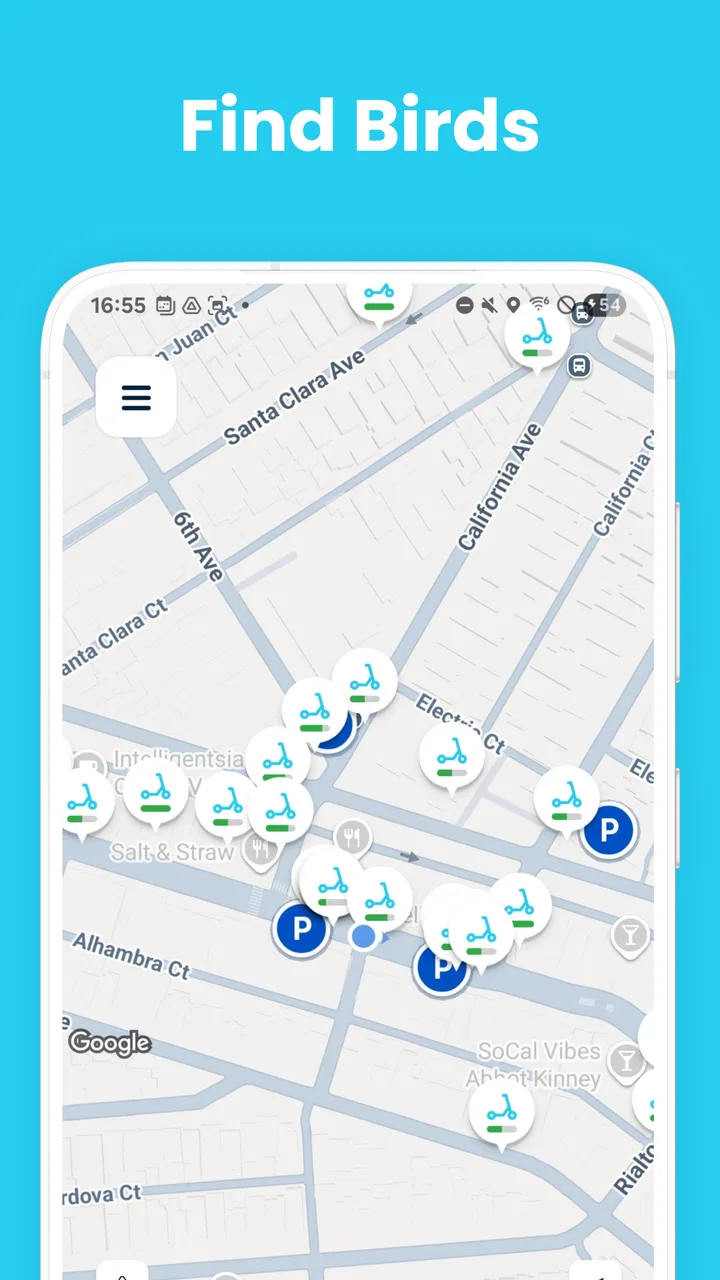
Bird — Ride Electric is a micro-mobility app that allows users to locate and rent electric scooters for short-distance travel within cities. Using the app, you can find nearby scooters, unlock them with a QR code, and enjoy a quick, eco-friendly ride to your destination. The app charges based on the duration of your ride.
02Is Bird — Ride Electric available in my city?
Bird — Ride Electric operates in numerous cities worldwide. To check availability, download the app and enable location services. The app will display a map of your area, highlighting available scooters. You can also visit the Bird website to see a list of supported cities.
03How much does it cost to ride a Bird scooter?
The cost of riding a Bird scooter typically includes a base fee plus a per-minute charge. Prices may vary by city, so it’s best to check the app for current rates in your location. Additionally, keep an eye out for promotions and discounts that Bird may offer to new or frequent users.
04What are the requirements to use Bird — Ride Electric?
To use Bird — Ride Electric, you must be at least 18 years old and possess a valid driver’s license. Users are required to wear helmets, follow local traffic laws, and park scooters responsibly. The app requires a smartphone with location services enabled to find and unlock scooters.
05Is Bird — Ride Electric safe to use?
Bird prioritizes rider safety by providing in-app tutorials on safe riding practices and encouraging helmet use. The app also includes features to report maintenance issues with scooters. However, riders should always stay aware of their surroundings and adhere to local traffic regulations to ensure a safe ride.
Pros
- Smooth riding experience in urban areas.
- Eco-friendly transportation option.
- Easy-to-use app interface.
- Wide availability in major cities.
- Affordable alternative to taxis.
Cons
- Limited battery range for long rides.
- Availability varies by city location.
- Requires a valid driver's license.
- Can be difficult to find in busy areas.
- Parking rules can be confusing.

Bird — Ride Electric
Gallery